

Description
4-MEO-PV9 (4-methoxy-PV9) is a synthetic research chemical from the group of α-Pyrrolidinophenone, which is arousing increasing interest in modern neurochemical and pharmacological research.
It is closely related to other cathinone derivatives such as 4-MEO-PV8 or α-PVP, but differs in that it has an extended side chain and the characteristic methoxy group in the para position of the aromatic ring.
This structural variation leads to altered physicochemical properties and makes 4-MEO-PV9 a particularly valuable substance for experimental studies in the field of neurotransmission.
In the Neuroscience 4-MEO-PV9 serves as a reference compound for studying signal transmission and receptor binding in the central nervous system.
Research groups use it to understand the interactions of synthetic stimulants with monoamine transporters and their effects on neuronal activity.
As the compound is intended for laboratory use only, it must not be used for human consumption or therapeutic applications.
Chemical structure and properties
Chemically, 4-MEO-PV9 belongs to the family of Cathinone, characterized by a keto group at the β-position of the alkyl chain.
Within this group, it is one of the so-called α-Pyrrolidinophenones, which are characterized by a pyrrolidine ring structure.
The methoxy substitution at the fourth position of the phenyl ring changes both the polarity and the lipophilicity of the compound and can influence the binding affinity to neurotransporter proteins.
Important chemical parameters
- Chemical name: 1-(4-methoxyphenyl)-2-(pyrrolidin-1-yl)octan-1-one
- Sum formula: C19H29NO2
- Molecular weight: approx. 303.4 g/mol
- Purity: ≥98 % (analytically tested using HPLC or GC-MS)
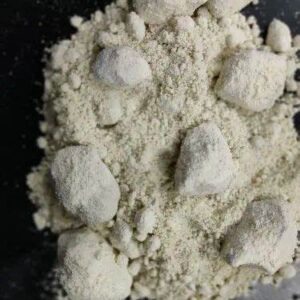
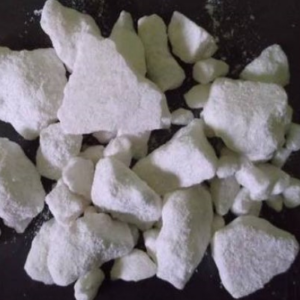
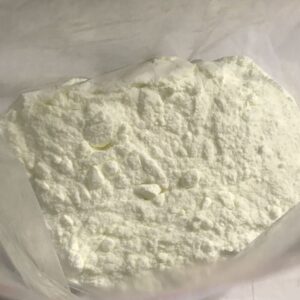
- Form of appearance: white to slightly beige crystalline powder
- Solubility: Soluble in ethanol, methanol and acetone; limited solubility in water
- Stability: Sensitive to light and heat; store in a cool, dry place
Due to its structural stability, the compound is well suited for chromatographic and spectroscopic investigations.
It is often used for quality testing by Gas chromatography-mass spectrometry (GC-MS) or Nuclear magnetic resonance spectroscopy (NMR) analyzed.
These methods ensure precise identification and purity determination, which is essential for reproducible research results.
Pharmacological and neurochemical relevance
4-MEO-PV9 is used in basic pharmacological research as a Model substance for monoaminergic stimulants used.
It serves to investigate how structural modifications within the pyrrolidinophenone class influence the activity of dopamine, noradrenaline and serotonin transporters.
These studies contribute to a better understanding of the interplay between chemical structure and pharmacological effect.
The methoxy group at the 4-position of the phenyl ring changes the electronic density of the molecule, which can lead to an altered binding affinity to certain receptor sites.
This allows differences in duration of action, potency and receptor preference to be recorded in comparison to non-substituted derivatives such as α-PVP or PV9.
Typical research questions
- How does methoxy substitution influence the binding affinity to dopamine transporters (DAT)?
- Does the lipophilic characteristic and thus the blood-brain barrier passage change?
- Which metabolites are produced during in vitro simulations of enzymatic processes?
- How do chemical structural changes correlate with neurochemical activity?
Such questions are crucial in order to develop new models for neuronal signal transmission and to better classify the toxicological risks of synthetic cathinones.
Research applications of 4-MEO-PV9
The substance is used in various fields of research, in particular in the Neurochemistry, Pharmacology and analytical chemistry.
It is suitable for investigating structure-activity relationships, pharmacokinetic mechanisms and enzymatic conversion processes.
Main areas of application
- Pharmacological studies: Investigation of the affinity to transporter proteins (DAT, NET, SERT)
- Analytical chemistry: Development of detection methods for pyrrolidinophenones
- Neurobiological experiments: Investigation of synaptic signal transmissions
- Forensic research: Identification of cathinones in biological samples
- Toxicological analyses: Characterization of metabolites and degradation products
4-MEO-PV9 is also known as Reference substance for the validation of analytical methods.
Forensic laboratories use it to compare mass spectra and retention times of synthetic cathinones and thus make the detection of illegal substances more precise.
Quality, analysis and documentation
Each laboratory batch of 4-MEO-PV9 is tested according to strict analytical procedures.
The standard methods include HPLC, GC-MS and NMR spectroscopy.
These tests confirm the chemical identity and purity of the compound.
Accompanying documents such as Certificates of Analysis (COA) provide detailed information on melting point, spectra and any residual solvents.
Only tested quality guarantees the scientific reproducibility of test results.
Cooperation with certified laboratory providers is therefore essential for every research institution.
Safety guidelines and handling
4-MEO-PV9 may only be used by qualified personnel in controlled laboratory environments.
Handling should be carried out in compliance with the Good Laboratory Practice (GLP) take place.
As the physiological effects of this substance have not been fully researched, strict safety measures are required.
Recommended precautions
- Wear protective clothing, gloves and safety goggles
- Only work under a ventilated chemical fume hood
- Avoid skin contact and inhalation of dust
- Storage in closed, labeled laboratory vessels
- Disposal of contaminated materials in accordance with the Hazardous Substances Ordinance
Suitable first aid facilities such as emergency showers and eyewash stations must be available in the laboratory.
In the event of spillage or contact with chemicals, standardized Decontamination protocols to follow.
Storage and stability
The substance should cool (2-8 °C), dry and protected from light be stored.
Moisture, direct sunlight and high temperatures can affect the chemical stability.
Storage in sealed glass or PTFE containers in an inert gas atmosphere (e.g. nitrogen or argon) is recommended.
Under these conditions, 4-MEO-PV9 remains stable over a longer period of time.
Legal status
The legal status of 4-MEO-PV9 is regulated differently internationally.
In Germany and several EU countries, the connection presumably falls under the New Psychoactive Substances Act (NpSG).
In the United States, it could be among the Federal Analogue Act as it is structurally related to controlled cathinones.
Before use, institutions must ensure that acquisition and storage are in accordance with national regulations.
Scientific significance
The research on 4-MEO-PV9 contributes significantly to the understanding of synthetic cathinones.
It helps to decipher neuronal transport processes, receptor activities and molecular signal transmissions.
In addition, the investigation of 4-MEO-PV9 provides important data for the development of analytical detection methods that are of great value in forensic and clinical contexts.
Due to the combination of chemical stability, defined structure and high purity, 4-MEO-PV9 remains a central tool in basic research on stimulating substances.
It supports the development of new hypotheses on the chemical modulation of neurotransmitter systems and thus makes a significant contribution to modern neuroscience.
Conclusion
4-MEO-PV9 is an analytical grade research chemical specifically developed for neurochemical and pharmacological studies.
It offers researchers the opportunity to understand the molecular basis of neuronal activity and at the same time to develop new analytical methods.
Handling must always be carried out under strictly controlled conditions and in accordance with applicable safety and legal regulations.
Overall, 4-MEO-PV9 represents an important tool in modern research - it expands knowledge of synthetic stimulants, supports analytical precision and promotes the advancement of experimental neuroscience.

 German
 French
 Dutch
Dutch Spanish
 Italian
 German (Switzerland)
 German (Austria)
 English (Canada)
 English (United States)
 Czech
Czech Polish
 Hungarian
 Russian
Reviews
There are no reviews yet.