

Description
U-47700 is a synthetic compound from the benzamide opioid class that was originally developed in the 1970s.
It was first published by the Upjohn Company which researched several similar molecules as potential painkillers.
Although U-47700 has never been approved as a drug, its structural similarity to other opioids has attracted considerable interest in the pharmacological and forensic research awakened.
In modern laboratory studies, the substance is mainly used to analyze receptor binding, pharmacodynamic effects and toxicological properties.
Chemical structure and classification
Chemically speaking, U-47700 belongs to the Benzamide derivatives and exhibits selective binding to the µ-opioid receptor on.
The compound is structurally related to other synthetic opioids such as AH-7921 and U-50488.
Its chemical name is N-[2-(dimethylamino)cyclohexyl]-N-methylbenzamide.
This structure gives U-47700 a high receptor affinity and strong analgesic potency.
Due to its high efficacy, it is used in research as a model substance to investigate opioid mechanisms and to evaluate the effect of µ-receptor agonists.
Physical and chemical properties
- Sum formula: C16H22N2O
- Molecular weight: approx. 258.36 g/mol
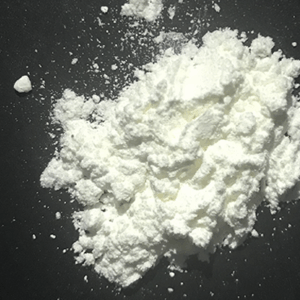
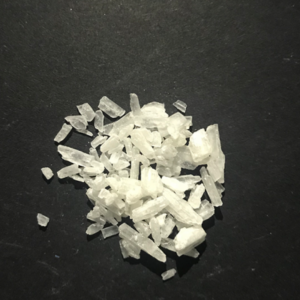
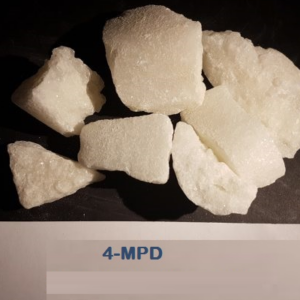
- Appearance: white to beige powder
- Solubility: highly soluble in organic solvents
- Stability: sensitive to light and temperature; should be stored in a dry place
These physical parameters enable safe handling in the laboratory and serve as a basis for analytical identification procedures such as GC-MS or LC-MS analyses.
Pharmacological effect
U-47700 acts as complete agonist at the µ-opioid receptor.
These receptors are responsible for the analgesic, sedative and euphoric effects of classic opioids.
Compared to morphine, U-47700 shows a significantly higher potency in preclinical studies, which makes it an interesting object for experimental analyses.
The substance is used in research models to investigate the Signal transduction, receptor binding and desensitization of opioid receptors.
The data obtained will contribute to the development of safe, selective analgesics that are less likely to have abuse potential.
Mechanism of action
After binding to the µ receptor, U-47700 activates G protein-coupled signaling pathways.
This leads to an inhibition of adenylate cyclase, a reduction in calcium influx and an activation of potassium channels, which reduces neuronal excitation.
This mechanism reduces pain transmission and leads to pronounced analgesia in model systems.
Areas of application in research
U-47700 is used in the modern pharmacological, biochemical and forensic research used.
The compound is primarily used as a reference substance in analytical laboratories and to investigate structure-activity relationships within the opioid class.
Typical research applications
- In vitro analyses of µ-receptor binding affinity
- Studies on receptor desensitization and signal transduction
- Toxicological and metabolic tests
- Comparative analyses with other benzamide opioids
- Method development for forensic identification
Since U-47700 is detectable in biological matrices such as blood and urine, it also plays a role in the toxicological analysis an important role.
It is used to validate detection methods and create analytical reference data.
Analytical detection methods
The identification of U-47700 is usually carried out via Gas chromatography-mass spectrometry (GC-MS) or Liquid chromatography coupled with tandem mass spectrometry (LC-MS/MS).
In addition, infrared and nuclear magnetic resonance spectroscopy can be used to clearly confirm the structure.
Analytical studies have shown that U-47700 exhibits characteristic fragmentation patterns that allow reliable differentiation from related substances.
These findings are particularly important for forensic laboratories and the development of screening procedures.
Toxicological and biological aspects
The high receptor affinity of U-47700 leads to a strong activation of opioid signaling pathways in biological systems.
Effects such as sedation, pain inhibition and reduced respiratory rate have been observed in research models.
These results underline the need for strict safety measures in laboratory environments.
In toxicological studies, particular attention is paid to the metabolization of U-47700.
The substance is primarily metabolized by oxidative N-demethylation and hydroxylation.
Understanding these metabolic pathways contributes to the development of detection methods and helps to identify potential toxic metabolites.
Safety and handling instructions
U-47700 may only be used in qualified laboratories in compliance with Good Laboratory Practice (GLP) and national safety standards.
Appropriate protective measures are required during handling to avoid accidental exposure.
Recommended safety precautions
- Wear a lab coat, gloves and safety goggles
- Working under a chemical fume hood
- Avoid contact with skin or inhalation
- Use of disposable pipettes and sealed sample containers
In addition, laboratories should have suitable disposal facilities to safely remove chemical residues.
Storage
- Temperature: 2-8 °C (chemically stable in cold storage)
- Environment: dry, dark and well ventilated
- Container: airtight and chemical-resistant
These storage conditions ensure high stability and prevent the substance from degrading over long periods of time.
Legal status
In almost all countries, U-47700 is used as a controlled substance classified.
In Germany, it falls under the Narcotics Act (BtMG), in the USA, it has been used by the Drug Enforcement Administration (DEA) in Schedule I.
The connection is also strictly regulated in the EU, Canada, Australia and Switzerland.
The manufacture, trade or use outside authorized research facilities is prohibited.
Scientific handling requires official authorization and compliance with national safety guidelines.
Significance in research
Despite the strict regulation, U-47700 remains a relevant model substance in opioid research.
Its strong receptor binding and clear structure-activity relationship make it a useful point of comparison for new substance classes.
Analytical findings from studies with U-47700 contribute to a better understanding of the pharmacological mechanisms of synthetic opioids.
Research relevance at a glance
- Understanding µ-receptor activation at the molecular level
- Comparative analyses of tolerance and addiction mechanisms
- Contribution to the development of safe analgesics
- Expansion of forensic detection methods
These research applications make an important contribution to clarifying the mechanisms of action and improving analytical methods in modern pharmacology.
Conclusion
U-47700 is a synthetic benzamide opioid with high potency and a pronounced more scientific Significance.
It serves as a model substance for research into opioid receptor binding, pharmacological signaling pathways and toxicological properties.
At the same time, handling U-47700 requires special care and strict compliance with legal regulations.
In research, U-47700 helps to deepen the understanding of opioid mechanisms and to develop new strategies for pain treatment and abuse prevention.
Only in approved, safe and legal laboratory environments can this substance make a valuable contribution to scientific knowledge.

 German
 French
 Dutch
Dutch Spanish
 Italian
 German (Switzerland)
 German (Austria)
 English (Canada)
 English (United States)
 Czech
Czech Polish
 Hungarian
 Russian
Reviews
There are no reviews yet.